
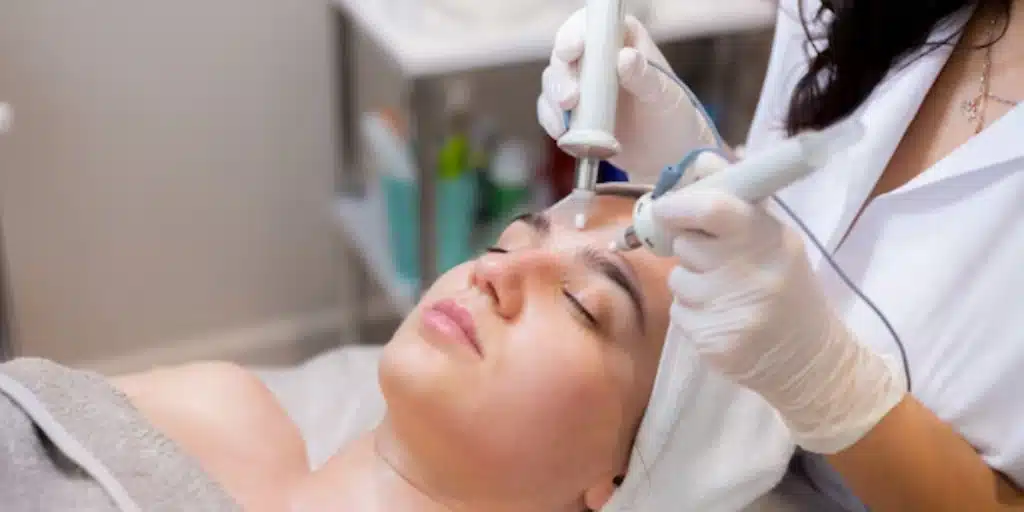
Maybe you have consistently followed a strict, dermatologist-recommended skincare regimen, including sun protection. But could not escape from pigmentation in Noida’s environment. You might also have tried topicals, but still, your dark patches persist. No worries, you even have clinical options, easily accessible!
The need for in-clinic pigmentation treatment in Noida is usually when the pigmentation is stubborn, deep-seated, or recurring. Often, when pigmentation is resistant to topical skincare, most people demand laser treatment or chemical peels in Noida.
Though both are dermatologist-approved for fading pigmentation, one question remains: which option will work better? The answer to this depends on the specific pigmentation concern, the extent of the problem, and your skin’s reactivity.
Let’s take a look at pigmentation treatment in Noida to help you choose between chemical peels and lasers.
Pigmentation Isn’t Just a Surface Problem- The Key Reason Why Topicals Don’t Work for Everyone
Pigmentation, or skin coloring, actually occurs in layers of the skin, where excess melanin pigment is deposited. Thus, pigmentation is of various types, based on the skin depths in which they exist:
- Surface-level (epidermal)- This is the mildest, easiest to treat, and will respond to treatment.
- Deeper (dermal)- This is the moderate to severe, stubborn pigmentation that slowly fades with treatment.
- Mixed pigmentation: A combination of epidermal and dermal pigmentation.
A dermatologist can only decide on the safest and most effective pigmentation treatment after knowing its type or depth.
Laser Treatment- An Advanced Route for Treating Pigmentation
How does it work?
Medical-grade, modern lasers penetrate deeper into the pigmented skin to precisely destroy and remove excess melanin deposits. The laser’s heat is absorbed by the melanin beneath the skin, breaking it down. And then, over time, the lymphatic system naturally clears the pigment particles.
Where laser really stands out:
Lasers are safest and most effective in the following cases-
- Dermal or mixed pigmentation
- Persistent sun tanning or sun damage
- Post-acne marks that are resistant to topical products
- Stubborn dark spots/patches that don’t lighten with the right peel or skincare.
But here’s the downside:
Laser treatment is not the first recommendation for every case, especially for melasma or sensitive skin. Laser heat may worsen the pigmentation if not done carefully.
Chemical Peels- The Basic, Most Strategically Used, Dermatologist’s Choice for Pigmentation
How does it work?
Chemical peels do not directly remove excess skin pigmentation; rather, they provide a layered approach to skin renewal. The dermatologist at Arcane Clinic carefully selects the peel type, based on the depth of pigmentation, and then applies it to the affected areas. Options include mild peels, such as glycolic acid, medium peels, such as salicylic acid, and deep peels, such as phenol. Whichever peel is used, it causes a controlled exfoliation- the removal of the damaged/old skin layers while boosting collagen remodelling. This allows the healthier, smoother, and evenly toned skin to come to the surface.
Where chemical peels really stand out:
Chemical peels work best for-
- Early post-acne marks
- Uneven skin tone
- Superficial pigmentation
- Skin dullness
- Rough skin
The real advantage?
Chemical peels are safer and more effective for Indian skin types that are at higher risk of post-inflammatory pigmentation. They can provide a gradual, controlled fading of pigmentation, ensuring long-lasting management of the concern.
Laser Vs Chemical Peel: The Crux of the Matter
When deciding between a laser and a chemical peel for pigmentation, focus on the skin’s condition and needs.
Here are the main practical points to compare the two:
- The Depth of Action- Lasers’ heat always goes beyond the epidermis, while only moderate to strong chemical peels can act beneath the surface.
- When Results Show Up- Laser treatment provides quicker, visible improvements in skin tone, while peels provide controlled, gradual skin improvements.
- Safety- Lasers, when expertly handled, can provide higher precision in melanin breakdown. Chemical peels are safer for beginners, for patients with sensitive/reactive skin, or for patients with melasma.
The Expert’s Thoughts: Which Treatment Works Better for Your Pigmentation?
We won’t provide a generalised answer, but rather share with you some specifics:
- For Melasma- Skin specialists usually suggest starting with chemical peels and then may switch to lasers.
- For Post-Inflammatory Hyperpigmentation- Chemical peels are better for mild to moderate cases, while lasers are safe for deeper marks/scars.
- For Stubborn/Mature Pigmentation- As pigmentation has shifted to deeper skin layers, lasers will be most effective.
- For Long-Term Pigmentation Management- Chemical peels are more predictable and can provide safer, gradual pigmentation reduction with less downtime.
- For Speedy Pigmentation Removal- Lasers, when correctly used, often show faster improvements in skin tone and texture.
In any case, laser or chemical peels are safe and effective for Indian skin types only when dermatologists choose the right setting or peel strength, as per one’s skin tone and reactivity.
The Best Approach for Pigmentation: Combination Therapy
Most pigmentation treatments are successful with a skin specialist, as they incorporate:
- Laser therapy– for deep, stubborn pigmentation
- Chemical peels– for the start, especially to fade out epidermal pigmentation and renew skin
Personalised - skincare routine- to maintain evenly toned skin and uniform skin texture
- The strict sunscreen application is for UV protection and low risk of recurrence or worsening pigmentation.
Common Misconceptions Debunked About Laser and Chemical Peels for Pigmentation
- Myth 1: Lasers are always favored over peels for treating pigmentation.
Reality: Peels can also be superior to lasers in some cases, especially for mild pigmentation or long-term pigmentation management.
- Myth 2: Chemical peels are too mild to fade pigmentation.
Reality: When a right peel is chosen and used, based on the depth of pigmentation, it will definitely work, probably slowly.
- Myth 3: A single professional treatment can help with pigmentation.
Reality: Pigmentation, be it superficial, deep, or mixed, always requires multiple treatments with laser or chemical peels. However, deep peels are usually used once for safety.
- Myth 4: Pigmentation, when treated by a skin professional, won’t reappear.
Reality: Pigmentation can recur if one does not strictly follow sun protection and recommended skincare. Maintenance is important with every treatment.
When to See a Dermatologist for Laser or Peel Pigmentation Removal?
Discontinue the use of topicals and promptly see a skin specialist if experiencing:
- Recurring/stubborn pigmentation
- Spread of dark spots/patches
- Uneven skin tone, despite proper skincare
- Resistant post-acne marks
- Sudden darkening of skin post-pregnancy or sunlight exposure.
Pigmentation treatment doctors in Noida at Arcane Clinic, ensure that every patient receives the most suitable treatment for pigmentation, whether it is chemical peels or laser therapy.
They carefully assess the patient’s skin type, pigmentation, and sensitivity before providing any type of treatment or a personalised approach. This helps your skin get exactly what it needs for safe, effective results.
Also, the cost of pigmentation treatments in Noida typically ranges from INR 3,000 to 5,000 per session, depending on the procedure and skin condition.
FAQs on Laser vs. Chemical peel for Managing Pigmentation
Which is safer: laser or chemical peel?
Laser or chemical peel, both are generally considered to be safe when performed by qualified professionals. However chemical peels are considered to be safer because they act only on the surface and can be controlled based on the patient’s tolerance.
Does laser remove pigmentation permanently?
Laser treatment can provide a dramatic reduction in pigmentation, but won’t help stopping it from returning. With proper care of treated skin and strict sun protection, the recurrence of pigmentation can be avoided.
How many sessions are needed to get rid of pigmentation?
The number of sessions needed to get rid of pigmentation depends on the depth of pigmentation. Both lasers and chemical peel sessions need to be repeated either for a significant reduction or management of pigmentation.
Can I combine a laser and chemical peel for pigmentation?
Yes, laser and chemical for pigmentation can be combined together but not always done together in the same session. Chemical peels and lasers can work wonders together on pigmented skin, but doctors may use both treatments as part of a planned, step-by-step approach, depending on one’s skin type and the severity of pigmentation.
Which is better for Indian skin: laser or chemical peels?
For Indian skin, both chemical peels and laser treatments can be effective, but the right choice depends on your type of pigmentation, patient age, and skin sensitivity.
For more details, consult a dermatologist.